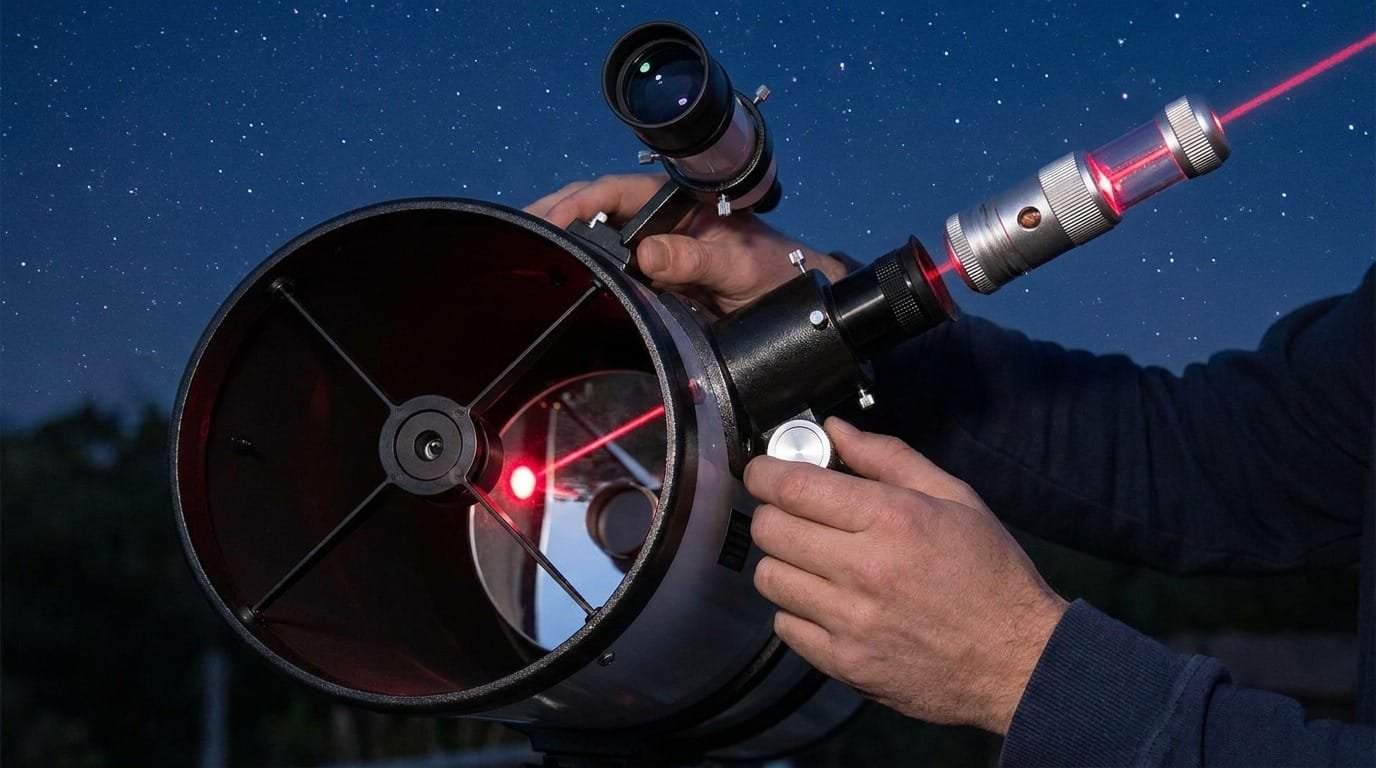
We spent over 150 nights testing beginner telescopes at dark-sky sites and suburban backyards. Each scope in this guide earned its place through real performance, not marketing promises. We looked at ease of setup, optical quality, and how often our team members actually used each scope.
This guide covers the five best beginner telescopes we have tested. We explain what each scope does well, where it falls short, and who it suits best. By the end, you will know exactly which telescope matches your budget and your goals.
What Beginners Need to Know Before Buying
Aperture: The Number That Matters
Aperture is the diameter of the primary lens or mirror. It determines how much light the telescope gathers. More light means brighter images and fainter objects become visible.
A 70mm refractor gathers enough light to show Jupiter’s four largest moons and Saturn’s rings. A 130mm reflector gathers nearly four times more light, revealing star clusters and brighter galaxies.
The rule of thumb: buy the largest aperture you can afford and transport. A telescope that stays in the closet because it is too heavy helps nobody.
Refractors vs. Reflectors vs. Compound
Three telescope types exist, and each has trade-offs that matter for beginners.
Refractors use lenses. They need almost no maintenance and produce sharp images. They cost more per inch of aperture, so they tend to have smaller openings.